Blog Post 3
Due to the last session, we decided to take a step back from SSS as they
seemed to struggle with the progression, and decided to take an approach into problem solving (Cronin and Allen, 2018) alongside fundamental movement skills which involved teamwork and communication which is what this age group needs to work on psycho-socially (Lloyd and Oliver, 2012). This is in hope that with better teamwork and communication, they can progress into doing more sport specific skills within future sessions.
The drills we planned revolved around moving hoops within groups or using hoops to move to places with “floor is lava”. At the very start, we
could see that the kids we have decided were the “strivers” had taken
on the leadership roles within their groups. We found this is positive as it
enabled them to keep challenging themselves whilst working on building their teamwork skills, and also allowed the other kids to work alongside other players within a team, developing that teamwork. However, we wanted them to also build up some leadership skills so to do this, we changed the groups around so that we put all the strivers together which meant the others could try and build up some competence which would lead to them being more self-determined (Deci and Ryan, 2012).
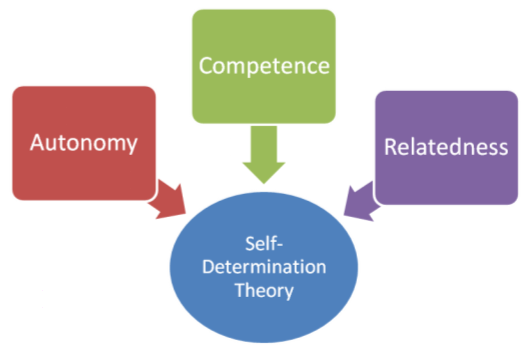
As much as we could see that the group enjoyed the session, I believe that
the drills were too easy for the group as there wasn’t many mistakes, and when looking at literature, i have found that if there are no mistakes being made, there isn’t any learning taking place (Halden-Brown, 2003).
Taking away from this session, I have realised that we need to find a balance between fundamental movement skills and sport specific skills that is right for the group so that they can learn the skills whist also being challenged. This can be taken into any session in the future, as I need to find the right challenge point for groups to enable them to learn properly.
References
Cronin, L. D. and Allen, J. (2018) ‘Examining the relationships among the coaching climate, life skills development and well-being in sport’, International Journal of Sports Science & Coaching, 13(6), pp. 815–827.
Deci, E. L., & Ryan, R. M. (2012). Self-determination theory. In P. A. M. Van Lange, A. W. Kruglanski, & E. T. Higgins (Eds.), Handbook of theories of social psychology (p. 416–436). Sage Publications
Halden-Brown, S. (2003). Mistakes Worth Making. Champaign, IL: Human Kinetics.
Lloyd, R. S. and Oliver, J. L. (2012) ‘The Youth Physical Development Model: A New Approach to Long-Term Athletic Development’, Strength & Conditioning Journal (Lippincott Williams & Wilkins), 34(3), pp. 61–72.
 Callum Bruce - Coaching Context Placement Blog